
The Most Important Vegetable Cutting Techniques – How to Prepare Ingredients Like a Pro
Updated: Jul 24

Whether you're making a crisp salad, a hearty soup, or an Asian-style stir-fry, every great recipe starts with proper ingredient preparation. Fresh produce is essential, but using the right cutting technique—and the right cuttingboard—makes an equally important difference.
Evenly cut vegetables not only create a more attractive presentation, but also ensure consistent cooking times and a better overall flavor experience. In this article, we'll introduce the most important cutting techniques every home cook should know.
Why the right cutting technique matters
Many people underestimate how much the size and shape of vegetables influence the final result of a dish. Different-sized pieces cook at different speeds. For example, thick carrot chunks and thin zucchini strips will not be ready at the same time.
Professional chefs therefore pay close attention to cutting ingredients into uniform sizes. With a little practice, anyone can achieve this at home.
A sharp knife and the right cutting board are the foundation of precise food preparation. JADE cutting boards are available in a wide range of sizes—from the compact and handy Gourmet Kitchen board measuring 20.3 × 15 cm to the heavyweight Gourmet Giant, measuring 61 × 36.8 cm with an impressive 2.5 cm thickness.
JADE offers cuttingboards in various designs and shapes for different applications. Whether you need non-slip feet for extra stability, a practical juice groove to catch liquids, or a dedicated bread cuttingboard with crumb grooves, JADE provides the ideal cuttingboard for virtually every kitchen task. This ensures plenty of workspace, comfort, and functionality for efficient food preparation.
1. Dice
Dicing is one of the most common cutting techniques in the kitchen. It is perfect for soups, stews, salads, stir-fries, and vegetable side dishes.
How to do it:
Slice the vegetable into even slices.
Cut the slices into strips.
Turn the strips and cut them crosswise into cubes.
Common vegetables:
Onions
Bell peppers
Potatoes
Carrots
Cucumbers
Benefits
Uniform cubes cook evenly and create an attractive presentation.
Larger cuttingboards from the Gourmet Kitchen, Gourmet Professional, and Gourmet Gripper series provide ample space to keep chopped ingredients organized without them falling off the board.
2. Julienne – Fine Vegetable Strips
The Julienne technique originates from French cuisine and refers to thin, uniform vegetable strips. Typically, they are about 2–3 mm wide and several centimeters long.
How to do it:
Slice the vegetables into thin slices.
Stack several slices together.
Cut them into fine strips.
Common vegetables:
Carrots
Zucchini
Celery
Bell peppers
Cucumbers
Ideal for:
Salads
Stir-fries
Vegetable sautés
Garnishes
Julienne vegetables cook quickly and add an elegant appearance to any dish.
For precise cutting, a stable working surface is essential. JADE cuttingboards with non-slip feet, such as the Gourmet Chef and Gourmet Gripper series, provide additional stability for better control while cutting.
3. Brunoise – The Professional Technique
Brunoise is considered one of the most advanced vegetable cutting techniques. It consists of producing very small, perfectly uniform cubes.
It always starts with a Julienne cut.
How to do it:
Cut the vegetables into Julienne strips.
Gather the strips together.
Cut them crosswise into tiny cubes.
Typical size:
Approximately 2–3 mm cubes.
Ideal for:
Fine soups
Sauces
Dressings
Benefits
The tiny cubes distribute evenly throughout a dish, creating a refined texture.
When performing delicate cuts like Brunoise, a high-quality cuttingboard makes a noticeable difference. The smooth, stable surface of JADE cuttingboards allows for precise knife control and comfortable handling.
4. Slicing
One of the simplest yet most versatile cutting techniques.
Depending on the recipe, slices can be thin or thick.
Common vegetables:
Cucumbers
Zucchini
Tomatoes
Eggplants
Potatoes
Ideal for:
Casseroles
Gratins
Salads
Vegetable dishes
Tip
Try to keep every slice the same thickness. This ensures even cooking.
If you're preparing larger quantities of vegetables, extra workspace becomes especially valuable. Larger JADE Gourmet cutting boards provide enough room to keep chopped ingredients on the board until you're ready to cook.
Common Mistakes When Cutting Vegetables
Using a Dull Knife
A sharp knife produces cleaner cuts while also improving safety.
The knife-friendly surface of JADE cuttingboards helps preserve the sharpness of high-quality kitchen knives for longer.
Not Enough Workspace
Small cutting boards quickly become crowded. Ingredients slide off the board, making preparation more difficult and less safe.
With a variety of sizes available, JADE offers the right cuttingboard for every kitchen task—from compact everyday boards to generously sized preparation boards.
Working too fast
Trying to cut too quickly often leads to mistakes.
A stable cuttingboard with a non-slip base provides greater safety and control. The Gourmet Chef and Gourmet Gripper series are specifically designed with non-slip feet to support precise cutting.
The right cuttingboard makes all the difference
Alongside a quality knife, the cutting board plays a key role in food preparation. Techniques such as Julienne and Brunoise especially benefit from a spacious, stable work surface.
JADE cuttingboards provide ideal conditions for every cutting task. Various sizes and designs are available to suit different cooking needs.
For meat preparation, the Gourmet Professional and Gourmet Gripper series feature practical juice grooves that collect excess liquids and help keep your countertop clean.
The JADE bread cuttingboard also stands out with its thoughtfully designed crumb grooves, which collect bread crumbs and keep your workspace tidy.
All JADE cutting boards are made from premium cellulose laminate and offer numerous advantages:
Dishwasher safe
Odor resistant
Knife friendly
Warp resistant
Splinter free
Heat resistant up to 176°C
Hygienic and easy to clean
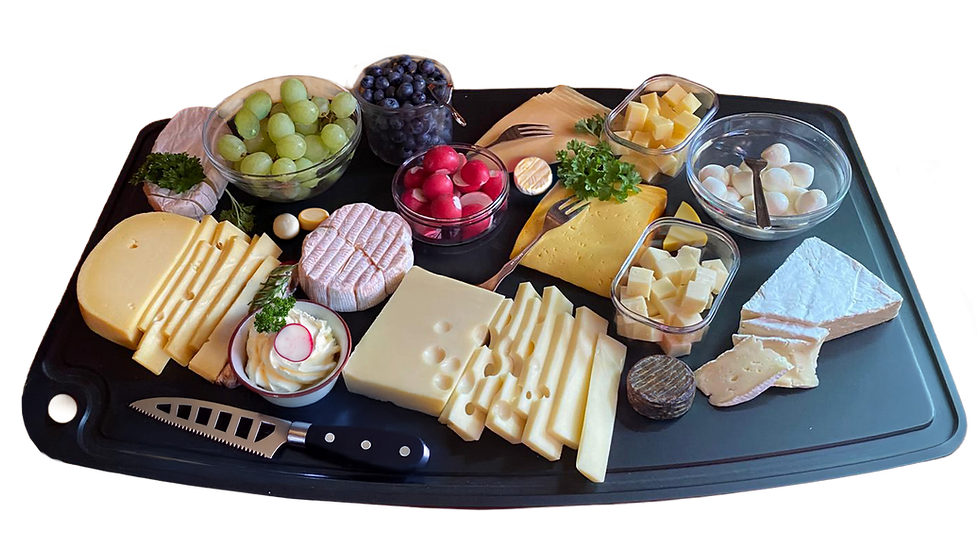
This makes them suitable not only for cutting, but also for serving food or as heat-resistant trivets for hot pots and pans.
Conclusion
Mastering the essential cutting techniques improves not only the appearance of your dishes but also their overall quality. Dicing, Julienne, Brunoise, and slicing are fundamental skills for every well-organized kitchen.
With a little practice, a sharp knife, and a high-quality cuttingboard, food preparation becomes faster, safer, and more professional.
JADE cuttingboards support every step of the process with thoughtful features such as multiple sizes, non-slip feet, juice grooves, crumb grooves, and a hygienic cellulose laminate surface. They help transform everyday food preparation into a comfortable and efficient cooking experience—and simple ingredients into beautifully presented meals.


Comments